Offset Smoker vs Pellet Grill: How to Choose
Last Updated: November 5, 2026
An offset smoker vs. pellet grill decision comes down to who runs the fire. An offset smoker burns wood splits in a side firebox and needs you to tend it. A pellet grill feeds hardwood pellets from a hopper into a burn pot, and its controller holds the temperature you set. This guide compares fire management, smoke flavor, cooking range, upkeep, and footprint so you can pick the one that fits how you cook. Backyard Kitchens Direct carries pellet grills and vertical pellet smokers from the Pit Boss Navigator line; we do not currently carry offset smokers.
Table of Contents
- Offset Smoker vs Pellet Grill: The Core Differences
- Offset Smoker Fire Management: Splits, Vents, and Attention
- Pellet Grill Temperature Control: Set-and-Forget Cooking
- Smoke Flavor, Bark, and the Smoke Ring
- Pellet Grill Cooking Range: Low-and-Slow to Direct Sear
- Fuel, Cleanup, and Maintenance Over Time
- Offset Smoker vs Vertical Pellet Smoker: Which Fits Your Space
- Shop Pellet Grills and Smokers at Backyard Kitchens Direct
- Frequently Asked Questions
Offset Smoker vs Pellet Grill: The Core Differences
An offset smoker burns wood splits in a side firebox and needs a cook to tend the fire. A pellet grill feeds hardwood pellets from a hopper into a burn pot and holds a set temperature with its controller. That one difference in how each makes heat shapes everything else: fuel, effort, smoke character, cooking range, and cleanup.
How Each One Makes Heat
An offset smoker is a horizontal cooking chamber with a firebox attached to one side. Wood splits burn in the firebox, and heat and smoke travel across the chamber and out the stack at the far end.
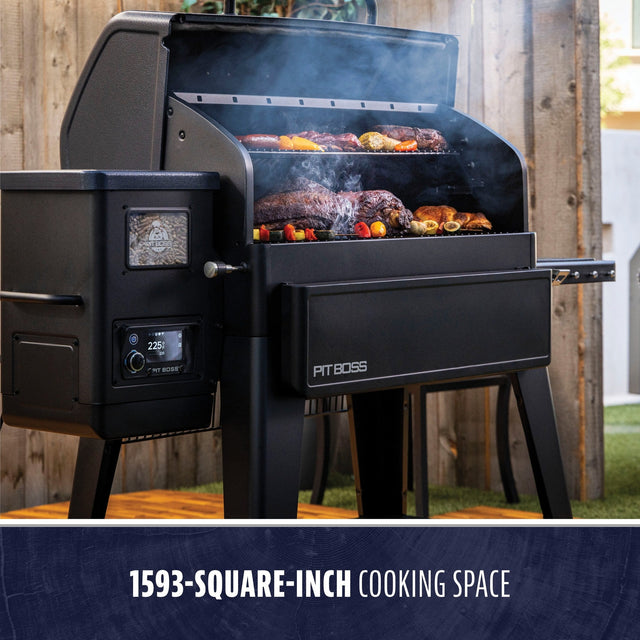
A pellet grill runs on electricity as well as wood. A hopper holds hardwood pellets, an auger feeds them into a burn pot, and the controller manages the feed to hold the set temperature. The Pit Boss Navigator models we carry require a standard 110–120V outdoor outlet.
At-a-Glance Comparison
| Factor | Offset Smoker | Pellet Grill |
|---|---|---|
| Fuel | Wood splits | All-natural hardwood pellets |
| Heat source | Live fire in a side firebox | Auger-fed burn pot with a controller |
| Attention needed | Frequent, hands-on | Periodic checks once the temperature is set |
| Temperature control | Vents and fire management | Digital set point on the controller |
| Cooking range | Mostly smoking and indirect roasting | Low-and-slow smoking to direct-flame searing on some models |
| Cleanup | Ash from splits, grease | Ash from pellets, grease, hopper care |
| Power required | Typically none | Standard 110–120V outdoor outlet (Pit Boss Navigator) |
| Learning curve | Steep | Gentle |
Offset Smoker Fire Management: Splits, Vents, and Attention
Offset smoker fire management is the skill of keeping a small, clean fire going for hours. The cook adds splits, opens the intake to bring the fire up, then closes it down to hold a steady temperature. Too much wood at once and the fire smolders; too little air and the smoke turns thick and bitter.
Building and Holding a Clean Fire
Offset smokers are typically started with a small bed of lit charcoal or embers in the firebox, with one or two splits added once that bed is established. A fire burning hot enough to ignite the gases coming off the wood tends to produce thin, light smoke rather than thick white or gray smoke. Closing the exhaust to slow the fire traps smoke in the chamber and can turn a clean burn dirty.
Split size and wood moisture both affect how an offset burns. Oversized splits tend to smolder, and green or damp wood spends its heat driving off moisture instead of burning clean. Follow the smoker manufacturer's instructions for fuel and vent settings.
The Overnight Cook
That rhythm is the appeal for some cooks and the dealbreaker for others. The fire does not tend itself, so an overnight cook on an offset means hours of checking the firebox and the temperature probe. Some cooks plan a daytime cook instead, and a remote temperature probe lets you monitor from indoors between fire checks.
Weather and the Fire
Cold, wind, and rain all change how an offset behaves. Wind pulls heat off the cooking chamber and can make the fire burn unevenly, and cold air generally increases fuel use. Wet splits will not burn clean, so keeping wood dry is part of managing the fire.
Pellet Grill Temperature Control: Set-and-Forget Cooking
On a pellet grill, the controller handles temperature, not the cook. Set a temperature on the controller or in the app, and the grill feeds pellets to hold it. You still check the food, the hopper level, and the grill during a long cook.
The Pit Boss Navigator 3-Series Vertical Pellet Smoker is a freestanding vertical pellet smoker with Wi-Fi and Bluetooth control through the Pit Boss Grills app, a temperature range of 130°F to 420°F, and a 50 lb. hopper for long cooks. If you are weighing a vertical pellet smoker against a horizontal pellet grill, read our guide to pellet grill vs. vertical pellet smoker.

Smoke Flavor, Bark, and the Smoke Ring
Smoke flavor comes from the fuel and the fire, and the two cookers deliver it differently. An offset burning splits is typically associated with a stronger smoke character, while a pellet grill is often described as producing a milder smoke profile. How strong the result tastes also depends on the wood, the meat, and the cook.
Bark is the dark, crusted surface on smoked meat that forms as the exterior dries and smoke and seasoning set on it. The smoke ring is the pink band just under the surface, formed by a reaction between compounds in the smoke and the meat. To match pellet flavors to the meat, see our wood pellets for smoking meat flavor guide.
Pellet Grill Cooking Range: Low-and-Slow to Direct Sear
A pellet grill can cover more ground than its smoking reputation suggests. The Pit Boss Navigator 1300 Wood Pellet Grill is a freestanding pellet grill and smoker with 1,329 square inches of cooking space and a Flame Broiler Lever for direct-flame searing up to 1,000°F. The Navigator 850 and 1600 pellet grills have the same Flame Broiler Lever.

On most offset smokers, the cooking happens indirectly in the main chamber, so they are generally used for smoking and roasting rather than a hot, fast sear.
Fuel, Cleanup, and Maintenance Over Time
Fuel and upkeep separate the two cookers as much as fire management does. An offset smoker runs on wood splits, which means sourcing, storing, and seasoning real wood. A pellet grill runs on bagged pellets, and Pit Boss specifies all-natural hardwood pellets only; it states that other fuels void the warranty.
Fuel Choice by Food
The fuel decision is also a food decision. Many cooks choose a wood to suit the meat, with stronger woods often paired with long cooks and fruitwoods with milder profiles. On a pellet grill, you make that choice through the pellet flavor instead of the split.
Cleanup by Fuel Type
Cleanup follows the fuel. Splits leave ash in the firebox; pellets leave ash in the burn pot and grease in the drip system. Both need grease management and a periodic deep clean. A pellet grill adds hopper care: keep pellets dry, because damp pellets can swell and jam the feed, and follow the manual for emptying the hopper before storage. An offset adds firebox care: clear ash regularly and keep the firebox dry between cooks to help prevent rust.
Weather and Performance
Weather changes fuel use and cooking time on both. A pellet grill depends on power and a controller, so keep the controller and hopper protected from rain. Cold and wind can make a pellet grill work harder to hold temperature. An offset needs dry fuel and a sheltered firebox, and wind can make it burn unevenly.
Ownership Over Time
Over a season, the maintenance rhythm differs. An offset asks for regular ash removal, firebox checks for rust, and a dry wood supply. A pellet grill asks for burn-pot ash removal, drip-system cleaning, and hopper care. Both benefit from a cover and a dry storage spot, and neither is maintenance-free. Follow the owner's manual for each cleaning step.
| Task | Offset Smoker | Pellet Grill |
|---|---|---|
| Fuel sourcing | Seasoned splits | Bagged hardwood pellets |
| Ash removal | Clear the firebox | Empty the burn pot |
| Grease | Drain and clean the chamber | Drain and clean the drip system |
| Before storage | Clear the firebox, cover | Hopper care per the manual, keep pellets dry, cover |
| Power needs | Typically none | 110–120V outdoor outlet (Pit Boss Navigator) |
| Weather care | Dry fuel, sheltered firebox | Protected controller, dry hopper |
Offset Smoker vs Vertical Pellet Smoker: Which Fits Your Space
Footprint often settles the offset smoker vs. vertical pellet smoker question before cooking style does. A horizontal offset needs a long run of patio for the cooking chamber and firebox side by side. A vertical pellet smoker stands taller and narrower, which can suit a smaller patio. Compare the overall assembled dimensions on the product page against your space.
The Pit Boss Navigator 3-Series Vertical Pellet Smoker has 1,118 square inches of cooking space on five porcelain-coated steel racks and a large viewing window. The Pit Boss Navigator 6-Series Vertical Pellet Smoker is the larger option, with 2,224 square inches on five 25.7" × 17.3" porcelain-coated racks and a 75 lb. hopper. Both are for outdoor use only, need a standard 110–120V outdoor outlet, and should be kept at least 12 inches from combustible construction at the sides and back. Review the owner's manual before assembly and first use.

Shop Pellet Grills and Smokers at Backyard Kitchens Direct
Choosing between an offset smoker and a pellet grill comes down to how much of the fire you want to run. An offset asks for attention and gives you direct control of the fire. A pellet grill holds the temperature for you while you check in. Neither is better for everyone; they suit different cooks, patios, and weekends.
If a pellet grill or vertical pellet smoker fits how you cook, our catalog carries the Pit Boss Navigator 850, 1300, and 1600 pellet grills and the Navigator 3-Series and 6-Series vertical pellet smokers. Compare cooking space and hopper capacity in the Pit Boss pellet grills and smokers collection.
Frequently Asked Questions
Are offset smokers better than pellet smokers?
Neither is better across the board. An offset smoker gives you hands-on fire management and is typically associated with a stronger smoke character, but it asks for steady attention and a supply of wood splits. A pellet grill holds temperature through its controller, and some models, like the Pit Boss Navigator line, add Wi-Fi and Bluetooth control. The right pick depends on how much time you want to spend tending a fire.
Which is easier to control, an offset smoker or a pellet grill?
A pellet grill is easier for most cooks. You set a target temperature and the controller feeds pellets to hold it; the Pit Boss Navigator 1300 lets you adjust in 5° increments from your phone. An offset smoker relies on fire management: you add splits and adjust the vents to keep heat steady. That takes practice.
Can a pellet grill cook more than smoked foods?
Yes, depending on the model. The Pit Boss Navigator 850, 1300, and 1600 pellet grills cover low-and-slow smoking and have a Flame Broiler Lever for direct-flame searing up to 1,000°F. The Navigator 3-Series and 6-Series vertical pellet smokers are built for smoking, with a range of 130°F to 420°F.
How much attention does an offset smoker need while cooking?
An offset smoker generally needs regular checks during a long cook: adding splits, adjusting the intake and exhaust vents, and watching the temperature. A pellet grill needs fewer check-ins, and a larger hopper, such as the 50 lb. hopper on the Pit Boss Navigator 3-Series, holds more fuel between refills. How long a hopper lasts depends on the temperature and conditions.
Questions before ordering? Call (904) 621-2505.