


Small Outdoor Kitchen Ideas: Layouts, Equipment, and Planning Tips
Table of Contents
- Planning a Small Outdoor Kitchen
- Choose the Right Type of Outdoor Cooking Setup
- Small Outdoor Kitchen Layout Ideas
- Prioritize Work Surface Before Adding More Appliances
- Plan Storage Around the Tools You Actually Use
- Think About Utilities Before You Choose a Product
- Choose Materials for Your Exposure, Not Just the Look
- Common Small Outdoor Kitchen Mistakes to Avoid
- Frequently Asked Questions
Last updated: August 25, 2026
Planning a Small Outdoor Kitchen
A small outdoor kitchen does not need to copy a full indoor kitchen to be useful. The goal is simpler: create a cooking area with enough room to prepare food, cook comfortably, and move around without blocking doors, seating, or the path through the yard.
Start with the space you actually have. Measure the patio or hardscape, note doors and walkways, and decide how many people need to use the area at one time. Then choose the setup that matches how you cook.
Choose the Right Type of Outdoor Cooking Setup
An outdoor kitchen can mean several different things. They are not interchangeable.
Freestanding Grill or Griddle
A freestanding grill or griddle is a self-contained cooking appliance on a cart or cabinet base. It can be a smart fit for a smaller patio because it leaves room for a separate prep table or dining area.
For homeowners who want flexibility, compare available freestanding gas grills and gas griddles.
Modular Outdoor Kitchen Island
A modular island is a ready-made or configurable outdoor unit that can combine a grill, storage, counter space, refrigeration, or a sink, depending on the model. It can reduce the need for custom masonry, but it may still require assembly, a level surface, and utility connections.
Explore outdoor kitchen islands for a more complete backyard cooking station without designing a contractor-built island from scratch.
Built-In Grill or Appliance
A built-in grill or appliance is installed into a purpose-built island or enclosure. It is not the same as a freestanding grill. The product manual for the exact model controls the required cutout, clearances, ventilation, and enclosure details.
Contractor-Built Outdoor Kitchen
A contractor-built outdoor kitchen is a site-built project, usually involving permanent framing, finishes, countertops, and sometimes gas, electrical, plumbing, or drainage work. It offers the most customization, but it also requires the most planning and coordination.
Small Outdoor Kitchen Layout Ideas
A good compact layout leaves room to cook and room to live in the backyard.
Use a Straight-Line Layout for Narrow Patios
A single-wall setup is often the best choice for a narrow patio or along the back of a home. Place the cooking appliance where you can use it safely according to its manual, then keep adjacent counter space for trays, utensils, and plating.
This is often more practical than forcing an L-shaped island into a space that also needs a door swing, dining chairs, or a clear walkway.
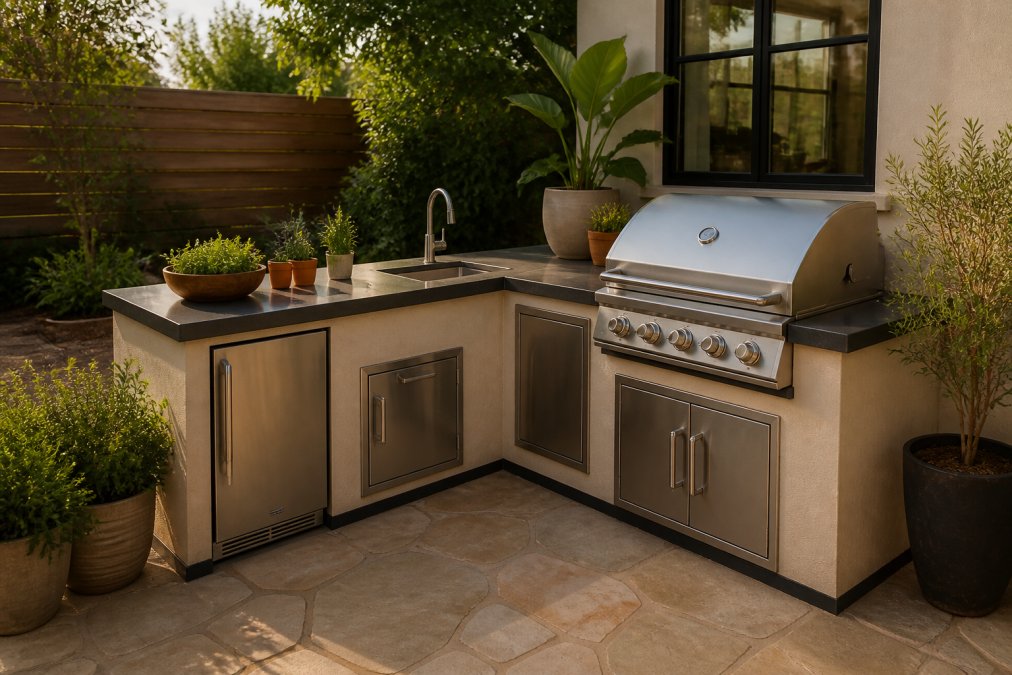
Use an L-Shape When You Need More Prep Space
An L-shaped plan can separate cooking from prep work without consuming the entire patio. Before committing, mark the proposed footprint with painter's tape. Open nearby doors, pull out chairs, and walk through the route you would take while carrying food from the house.
Use a Mobile Prep Surface When Permanent Cabinetry Is Too Much
A rolling cart or weather-suitable prep table can add useful workspace without making a small patio feel built-in from wall to wall. It is especially helpful for homeowners who want to start with a freestanding grill, griddle, or smoker before investing in an island.
Prioritize Work Surface Before Adding More Appliances
The most common small-space mistake is choosing the largest cooking appliance that fits, only to find nowhere to set a tray, cutting board, or serving platter.
Choose one primary cooking appliance first. Then protect enough nearby prep space for the way you cook.
A gas grill may be the right primary appliance for conventional grilling. A freestanding gas griddle may make more sense for breakfast, burgers, stir-fry-style meals, and larger batch cooking. A smoker can be a better second appliance for homeowners who value low-and-slow barbecue more than a second high-heat cooking surface.
More appliances are not automatically better. In a compact setup, a useful counter and accessible storage often add more value than a second appliance.
Plan Storage Around the Tools You Actually Use
Small outdoor kitchens get cluttered quickly when you treat storage as an afterthought. Start with the items that need a home:
- Grill tools and a thermometer
- Cooking oil and seasonings
- Cleaning tools
- Covers and accessories
- Serving trays and paper goods
- Fuel or electrical-accessory storage, where permitted by the manufacturer
Use enclosed outdoor-rated storage where possible, and avoid putting shelves, hooks, or decorative items near a grill until you have reviewed the appliance manual. Heat, clearance, and access requirements vary by model.
Think About Utilities Before You Choose a Product
Fuel type and utilities affect the layout as much as the island shape.
A propane appliance may offer more placement flexibility than a natural-gas appliance, but the product instructions still control where and how you can use it. A natural-gas grill or a kitchen with refrigeration, a sink, or lighting may require professional planning and local approvals.
Before buying, answer these questions:
- What fuel type does the appliance require?
- Is the outdoor surface level and suitable for the product?
- Will it require gas, electrical, water, or drainage connections?
- What does the product manual require for clearances, ventilation, and access?
- Does your local building department require permits or licensed trade work?
Backyard Kitchens Direct can help you compare product dimensions and fuel options, but follow the manufacturer's instructions and the requirements of the local authority having jurisdiction for installation decisions.
Choose Materials for Your Exposure, Not Just the Look
Outdoor equipment faces rain, humidity, sun, salt air, and temperature swings. A material that works well in one backyard may need more care in another.
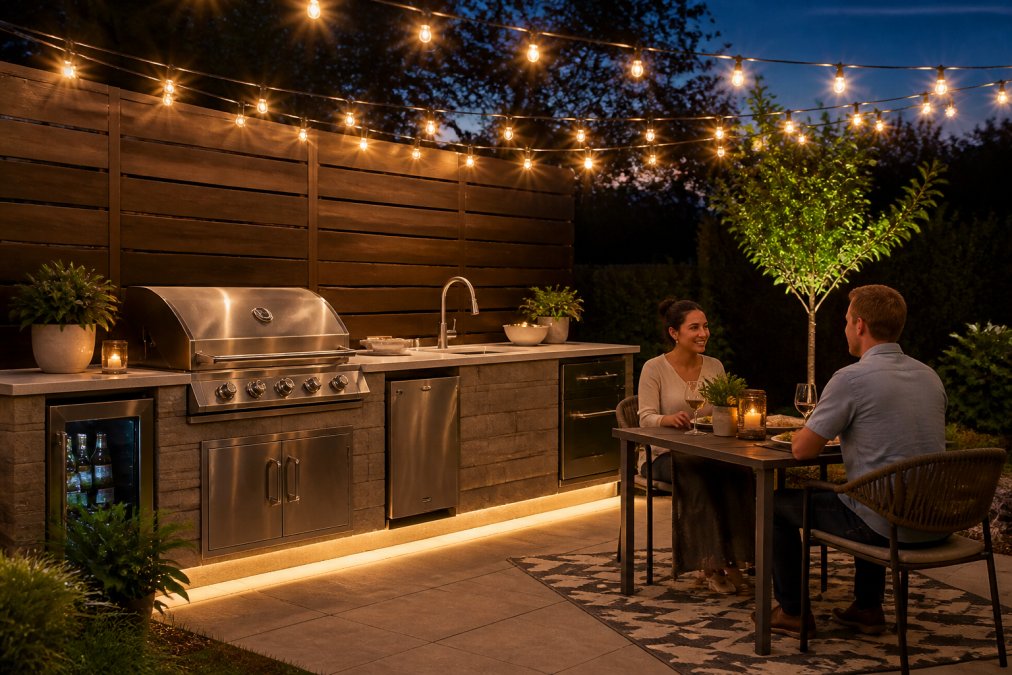
Review the manufacturer's stated material specifications, care instructions, and warranty terms before buying. In coastal or high-chloride environments, corrosion resistance deserves special attention; stainless-steel grades can perform differently under chloride exposure. The Nickel Institute notes that molybdenum improves resistance to chloride-induced corrosion, but the right choice still depends on the specific product and application.
A cover, routine cleaning, and proper drainage around the cooking area are often just as important as the finish itself.
Common Small Outdoor Kitchen Mistakes to Avoid
Buying Before Measuring
Measure the full appliance footprint, not just the grill head or cooking surface. Include side shelves, lid clearance, doors, drawers, and walking space.
Confusing a Modular Island With a No-Installation Project
A modular island may reduce custom construction, but it can still require assembly, placement, anchoring, fuel, electrical, or plumbing.
Treating a Built-In Grill Like a Freestanding Grill
Built-in equipment has model-specific enclosure and clearance requirements. Review the installation manual before finalizing an island design.
Ignoring Smoke and Traffic Flow
Place the cooking area where it will not interfere with doors, seating, or the normal route through the patio. Consider wind direction, but do not rely on it as a substitute for proper placement and appliance clearances.
Making a Sink the Default Requirement
A sink can be useful, but it is not required for every small outdoor kitchen. What matters is having a realistic plan for handwashing, cleanup, and safe food handling. The USDA recommends washing hands and surfaces often when cooking outdoors. Read the USDA's food-safety guidance.
Frequently Asked Questions
What are some ideas for a mini outdoor kitchen in a small space?
A mini outdoor kitchen works best when you build around a single cooking zone and keep everything within arm's reach. A compact island with a built-in grill, a short run of countertop for prep, and one or two storage cabinets underneath covers the essentials without overwhelming a small patio. Foldable side tables add prep surface when you need it and fold away when you don't. Vertical shelving above the counter handles tools and spices, keeping the footprint tight.
How do you choose the right grill for a small outdoor kitchen?
Measure your available space first, then compare footprints against what you actually have room for. A built-in gas grill integrates cleanly into an island and frees up surrounding counter space. If you want a single appliance that covers both direct grilling and lower, slower cooking, compare models that list a wider temperature range in their manual. For renters or frequent movers, a high-output freestanding or cart-style grill keeps your outdoor kitchen appliance selection flexible.
Can you install an outdoor kitchen on a small apartment balcony?
Yes, with the right approach. Balconies typically prohibit open-flame gas appliances due to building codes and HOA rules, so check your lease and local fire codes before buying anything. Electric multi-function grills and compact portable units are usually the safest options. Weight is also a real constraint on a balcony: verify your building's load rating with your building manager, and check the exact shipping and installed weight in the product manual before planning any permanent or semi-permanent setup.
What are the most common outdoor kitchen design mistakes to avoid?
The biggest mistake is skipping the layout plan and buying appliances first. Without a measured floor plan, you can end up with a grill that leaves no countertop space for prep. Other common errors include ignoring utility routing early in the project (adding a gas line or outdoor sink after the structure is built costs significantly more), choosing materials not rated for your local climate, and underestimating storage needs, which leads to cluttered countertops that make the cooking zone feel even smaller.