Choosing the Right Outdoor Griddle Cover: Fit and Care
Table of Contents
- What an Outdoor Griddle Cover Needs to Do
- Start With Your Setup: Cart or Built-In
- How to Measure a Griddle for a Cover
- Griddle Cover Materials and Construction
- Fit and Fastening: Snug, Not Stretched
- Keep Moisture from Collecting Under the Cover
- Caring for the Cover and Knowing When to Replace It
- Frequently Asked Questions
Last Updated: October 23, 2026
What an Outdoor Griddle Cover Needs to Do
An outdoor griddle cover has two jobs: keep rain, dust, pollen, and debris off the griddle, and stay in place when the wind picks up. A cover that does one without the other leaves the cooking surface exposed or traps moisture against it.
Choosing the right one comes down to three things: a fit made for your exact setup, a material and fastening style that suit where the griddle lives, and a simple routine before the cover goes on. This guide walks through each, starting with the question that decides the size: is your griddle on a cart, or built into an island?
Start With Your Setup: Cart or Built-In
Freestanding and built-in griddles take different covers. A cover made for one won't fit the other properly, so settle this before you measure.
Griddles on a Cart
A freestanding griddle sits on a cart, and the cart is what the cover has to fit. That usually means a full-length cover that reaches toward the ground and accounts for side shelves, handles, and anything that sticks out from the cart.
The Wildfire Grill & Griddle Cover shows how a cart cover works. Its 30-inch griddle cart version is full length, covers the cart with the side shelves up, and secures with Velcro straps.

Built-In Griddles in an Island
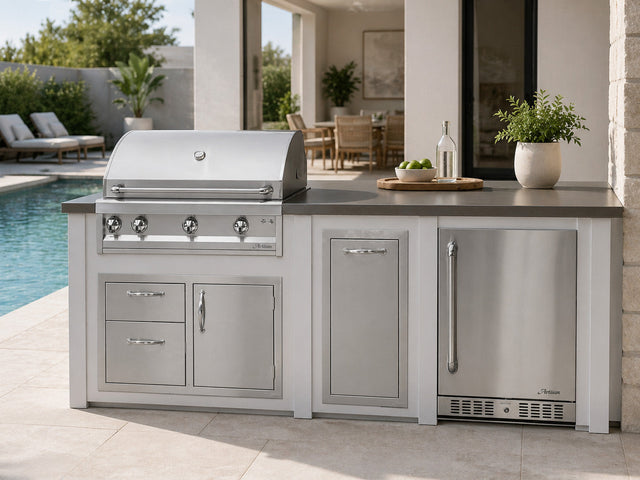
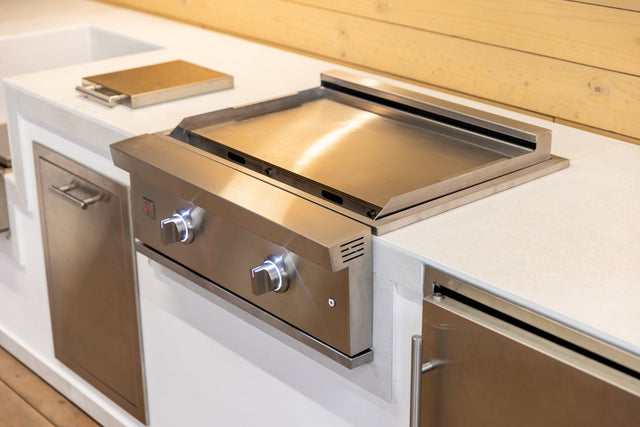
A built-in gas griddle sits in a cutout in an outdoor kitchen island, so the cover only has to fit the griddle head on the countertop. A head cover should cover the whole head, including the control knobs on the front.
The Wildfire Grill & Griddle Cover's 30-inch griddle version is made this way. It fits the complete Ranch Pro 30-inch griddle head, knobs included, and uses elastic banding to stay in place.

Some built-in griddles come with a cover of their own. The Wildfire Ranch Pro 15-Inch Side Griddle, for example, includes a stainless steel cover. Check what's included with your griddle before you buy a separate one.
How to Measure a Griddle for a Cover
The cooking surface is the wrong number to shop by. A cover has to clear everything around it, so measure the outside of the whole unit and write each number down in inches.
Measurement Checklist
- Width at the widest point. For a cart, include side shelves, shelf brackets, and handles. Measure with the shelves in the position the cover expects; the Wildfire cart covers, for example, are made to go on with the side shelves up.
- Depth at the deepest point. Include knobs, front handles, and anything at the back of the unit.
- Height. For a cart, measure from the ground to the highest point. For a built-in head, measure from the countertop to the top of the head. If your griddle has a hood or lid, measure with it closed.
- Anything that sticks out. On some griddles the grease cup or tray sits outside the body. Note where it is. The cover either needs to clear it, or the manual may say to remove it first.
Compare Your Numbers to the Cover, Not the Cooking Surface
A "30-inch griddle cover" is sized for a specific 30-inch griddle or cart, not every griddle with a 30-inch cooktop. The best match is a cover the griddle maker sizes for that exact model. If you're buying a general-fit cover, compare your measurements against its stated dimensions and the maker's sizing chart.
A cover that's too small strains the seams and won't seat. One that's much too large catches wind and collects water in the folds.
Griddle Cover Materials and Construction
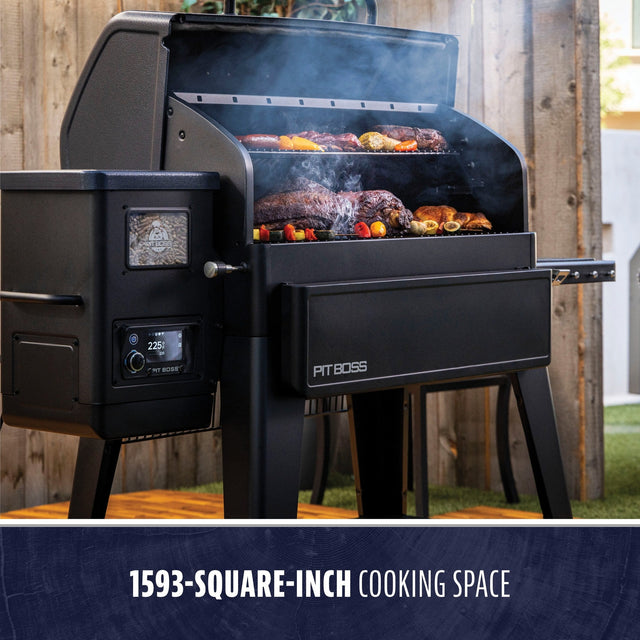
Most outdoor griddle and grill covers are made from vinyl or from a polyester fabric, often with a coating or backing to shed water. For example, the Wildfire Grill & Griddle Cover is black all-weather vinyl, and the Pit Boss covers we carry for their pellet grills and smokers are heavy-duty polyester with PVC backing.
Rather than picking a material by name alone, compare what the maker actually states:
- Weather use. Look for a cover described for outdoor, all-weather, or water-resistant use.
- Sun exposure. If the griddle sits in full sun, look for a stated UV-resistant material or coating.
- Seams and edges. Seams and corners take the most wear, especially over knobs and shelf brackets.
- Fit for your model. A model-specific cover usually beats a heavier material in the wrong size.
Fit and Fastening: Snug, Not Stretched
A cover should sit flat and stay put in wind, but you shouldn't have to strain to pull it on. A cover stretched tight wears at the seams. One that hangs loose lets wind lift it and lets rain and debris get underneath.
Fasteners do the rest of the work. Head covers often use elastic banding to hug the griddle head, while cart covers often use straps to secure them to the cart. If your griddle sits in an open, windy spot, check that the cover's fastening holds before you count on it.
Keep Moisture from Collecting Under the Cover
A cover keeps rain off, but it can also hold moisture in. Water left on the griddle, or warm, humid air trapped under the cover, can condense on the metal as it cools. The routine before the cover goes on matters as much as the cover itself.
Prepare the Griddle Before You Cover It
- Clean the cooking surface. Follow your griddle's manual. Cooking surfaces differ: the Summerset and Wildfire griddles we carry list stainless steel cooking surfaces, and the Bull built-in griddle lists a chromium-plated surface, so the right cleaning and oiling steps depend on your model. Our guide to cleaning an outdoor griddle after cooking walks through the basics.
- Empty the grease cup or tray. Standing grease attracts moisture, dirt, and pests.
- Let the griddle cool completely. Covering a warm griddle traps heat and moisture under the cover.
- Make sure it's dry. Wipe off any water before the cover goes on.
- Put the cover on and fasten it. Check that it sits flat, with no corners caught on knobs or brackets.
If you do find rust after a wet stretch, our guide on how to remove rust from an outdoor griddle covers what to do next.
Match Your Routine to Your Climate
- Humid or rainy areas. Lift the cover on dry days to let the griddle air out, and check underneath for moisture after a stretch of wet weather.
- Coastal air. Salt air is hard on exposed metal, so keep the griddle covered between cooks and stay on top of cleaning.
- Snow and freezing weather. Brush snow off the cover rather than letting it build up, melt, and refreeze.
- Covered patios. A roof cuts down rain and sun, but dust, pollen, and humidity still reach the griddle, so a cover still helps.
Caring for the Cover and Knowing When to Replace It
A clean cover works better. Brush off dust and debris, and wipe it down with a soft, damp cloth, following any care instructions from the cover's maker. Skip harsh chemicals and abrasive scrubbers. Let it dry fully before you put it back on or store it.
How long a cover lasts depends on sun, weather, and how it's stored. Replace it when you see:
- Cracks, tears, or holes
- Seams separating or stitching coming loose
- Material turning brittle or stiff
- Straps, bands, or fasteners that no longer hold
- A fit that no longer sits snug on the griddle
Frequently Asked Questions
How do you measure an outdoor griddle for a cover?
Measure the outside of the whole unit, not just the cooking surface: width at the widest point, depth at the deepest point, and height. For a griddle on a cart, include the side shelves and handles and measure height from the ground. For a built-in griddle, measure the head from the countertop up, including the control knobs. Then compare your numbers to the cover's stated dimensions or the maker's sizing chart.
Is a built-in griddle cover different from a cart cover?
Yes. A built-in griddle cover fits only the griddle head on the countertop, knobs included. A cart cover is full length and covers the whole cart, including the shelves. Some built-in griddles, like the Wildfire Ranch Pro 15-Inch Side Griddle, come with their own cover.
What material is best for an outdoor griddle cover?
Most outdoor covers are vinyl or a coated or backed polyester fabric. The right choice depends less on the name of the material than on fit and what the maker states about weather and sun resistance. A cover made for your exact griddle model is usually the best starting point.
Should an outdoor griddle cover fit tightly or loosely?
Snug, but not stretched. It should sit flat and stay put in wind without straining the seams. A cover that hangs loose can blow off or let rain underneath. Elastic banding and straps help hold it in place.
How do you keep moisture from collecting under a griddle cover?
Clean the griddle, empty the grease cup, and let it cool and dry completely before the cover goes on. In humid or rainy weather, lift the cover on dry days to let the griddle air out, and check underneath after wet stretches.
Backyard Kitchens Direct carries the Wildfire Grill & Griddle Cover, sized for Wildfire Ranch Pro grills, griddles, and carts, including the 30-inch griddle head and the 30-inch griddle cart. See the rest of the lineup on our Wildfire Outdoor Living brand page. Not sure which cover fits your griddle? Call (904) 621-2505.