


How to Clean an Outdoor Griddle After Cooking
Table of Contents
- Start With Your Griddle's Manual
- A Product-Specific Post-Cook Cleaning Routine
- Griddle Cleaning Tools You Should Have on Hand
- Clean the Grease Tray or Cup as Directed
- Seasoning and Conditioning Are Model-Specific
- Common Cleaning Mistakes to Avoid
- When to Stop and Consult the Owner's Manual
- Frequently Asked Questions
Last Updated: August 26, 2026
Start With Your Griddle's Manual
Start cleaning an outdoor griddle after cooking by checking the owner's manual. Griddle plates, coatings, grease systems, and approved cleaning methods vary by model. Some manufacturers describe a warm-surface cleanup method, while others instruct owners to let the plate cool first. Treat your griddle's manual as the final authority.
This guide provides a conservative routine for homeowners with freestanding gas griddles: shut the appliance down, use approved tools and cleaners, manage grease safely, and protect the cooking surface only as the manufacturer directs.

A Product-Specific Post-Cook Cleaning Routine
A consistent order helps, but the temperature and cleaning method must match the manual for the griddle in front of you.
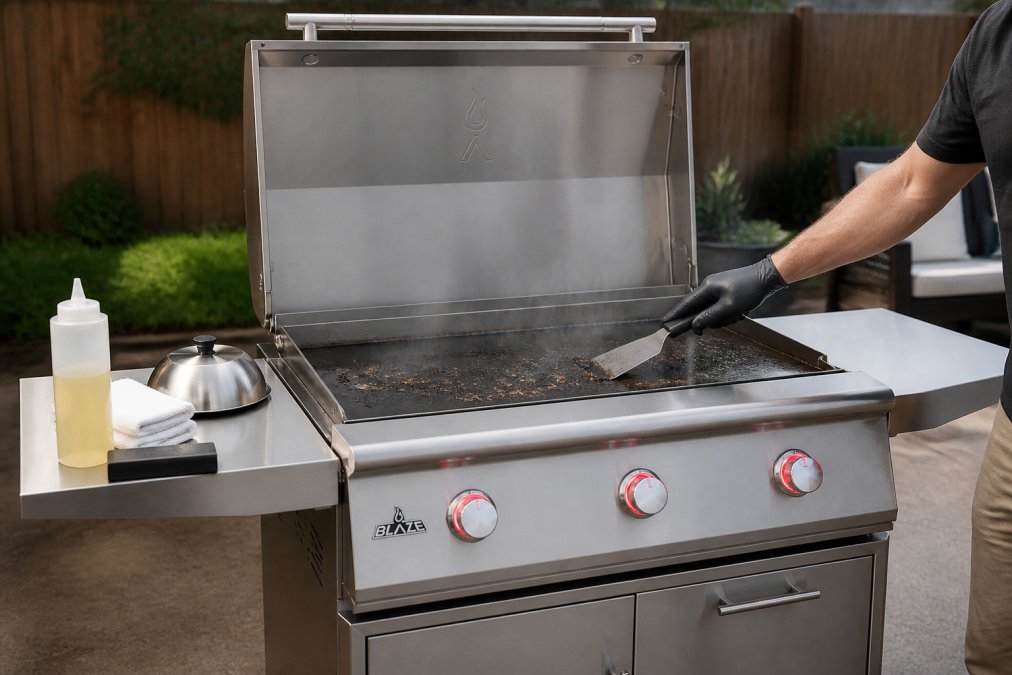
- Turn the burners off. Allow the appliance to reach the condition specified in its manual before touching the plate, using water, or handling the grease system.
- Remove food residue with an approved tool. Use a scraper, spatula, cloth, or other tool only if the manufacturer permits it for that cooking surface. Move loose debris toward the grease channel or collection area when your model has one.
- Use liquids and cleaning products only as directed. Water, vinegar solutions, specialty cleaners, pads, and soap are not interchangeable across griddle surfaces. Follow the manual's directions for product type, amount, and surface temperature. Do not substitute a generic deglazing method.
- Wipe the plate dry. After the approved cleaning process, remove residue and moisture as directed. If the manual calls for a light oil layer or another protective step, use only the recommended method.
Do not cover a damp or still-warm griddle unless the manufacturer specifically says it is appropriate. Check the manual before storing or covering the appliance.
Griddle Cleaning Tools You Should Have on Hand
- Manufacturer-approved scraper or spatula: Use the tool recommended for your model's plate and coating.
- Paper towels, clean cloths, or microfiber cloths: Use these to wipe away residue and dry surfaces when the manual allows.
- A non-abrasive pad: Use only one the manufacturer approves for the cooking surface.
- Approved oil or cleaner: Keep these model-specific. A product that is appropriate for one griddle may not be appropriate for another.
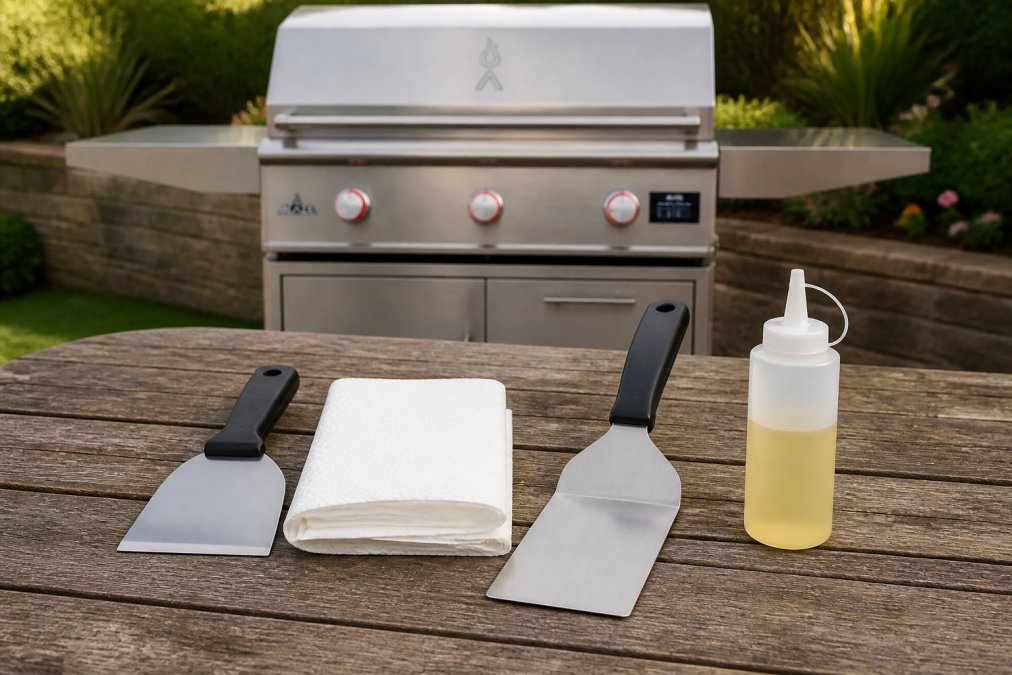
Avoid steel wool, wire brushes, harsh degreasers, oven cleaner, and household products unless the product manual explicitly permits them. Aggressive tools or chemicals can damage a cooking surface or leave residue that requires additional cleaning.
Clean the Grease Tray or Cup as Directed
If your griddle has a grease tray, cup, or drip system, make it part of the post-cook routine. Wait until the unit has cooled as directed before removing the component. Empty it carefully, clean it using the method specified in the manual, dry it as required, and reinstall it securely before the next cook.
For example, the Blaze LTE PRO 40 uses a front-positioned drip trough to channel grease for easier cleanup. Its manual is the right place to confirm how often to empty it, how it detaches, and what to check before the next cook. Other griddles use different tray designs and removal methods, so do not assume the same process applies to every model.
A clean cooking surface is only part of the job. Check the grease-management component before the next use.
Seasoning and Conditioning Are Model-Specific
Don't assume the plate material alone tells you what to do after cleaning. Some griddles require seasoning or a light protective oil layer; others have different care instructions. The owner's manual should identify whether this step applies, which products are approved, and the correct temperature and timing.
When a manual calls for oil, apply only the amount and type it specifies. Too much oil can leave residue, while an unapproved product may create an avoidable cleanup problem.
Common Cleaning Mistakes to Avoid
- Following a generic routine instead of the model manual. Temperature, liquids, tools, and protective steps can differ.
- Using an unapproved scraper, pad, brush, or chemical. These can damage the cooking surface or create residue issues.
- Handling the grease tray before it is ready to handle. Follow the cooling guidance for your appliance.
- Leaving the plate wet or covering the appliance while it is damp. Follow the manufacturer's drying and storage instructions.
- Trying to solve unusual damage with a stronger cleaner. Rust, pitting, a blocked grease system, or persistent residue may require model-specific guidance.
When to Stop and Consult the Owner's Manual
Pause and consult the manual or manufacturer when the cooking surface shows rust, pitting, unusual discoloration, or a sticky residue that normal approved cleaning does not resolve. Do the same if the grease system appears blocked or damaged, or if you used a cleaner that may not be approved for the surface.
Homeowners comparing equipment can explore the current selection of freestanding gas griddles at Backyard Kitchens Direct.
Frequently Asked Questions
Should I apply oil to my griddle after cleaning it?
Only if the owner's manual says so; some griddles require seasoning or a light protective oil layer, while others use different care instructions. Use the approved product and method for your exact model.
Is it necessary to use soap when cleaning an outdoor griddle?
Do not assume soap is either required or prohibited. The correct method depends on the plate, coating, and manufacturer instructions. Use only the cleaner and process approved for your griddle's cooking surface.
How do I remove baked-on grease from an outdoor griddle?
Start with your model's manual. It should say whether you can clean the surface with a scraper, a pad, water, a vinegar solution, a specialty cleaner, or another method. Avoid stronger chemicals or more abrasive tools without that guidance.


