How to Remove Rust from an Outdoor Griddle Top
Table of Contents
- Start With the Cooking Surface and the Manual
- How to Tell Light Surface Rust from Heavy Rust
- Tools for Griddle Rust Removal
- How to Remove Rust from an Outdoor Griddle: Step by Step
- Rebuild the Protective Layer
- How to Keep Rust from Coming Back
- When Rust Keeps Coming Back
- Mistakes That Damage a Griddle Surface
- Frequently Asked Questions
Last Updated: October 14, 2026
Rust on a griddle top is usually fixable, but the right fix depends on what the cooking surface is made of. A method that works on a seasoned steel flat-top can scratch a stainless plate or wear through a plated one. Start by identifying the surface and reading its manual, then use the mildest method that works.
Start With the Cooking Surface and the Manual
Outdoor griddles use different cooking surfaces, and each one has its own care rules. Check the owner's manual and the product page for your exact model before you pick up a scraper or a cleaner.
- Seasoned steel (carbon or cold-rolled steel): common on many flat-tops. The steel has little built-in rust resistance and relies on a seasoned layer of cooked-on oil for protection, so rust shows up quickly when that layer wears thin, or the plate stays wet.
- Stainless steel: the griddles Backyard Kitchens Direct carries today list stainless steel construction. For example, the Summerset Griddle Pro 30-inch has an 8 mm-thick #304 stainless steel cooking surface. Stainless resists rust better than other steels, but Wildfire's griddle manual notes that it isn't fully stain- or weather-proof and can still discolor, corrode, and rust if you don't maintain it.
- Chrome-plated: some griddles, such as the Bull 30-inch built-in griddle, have a chromium-plated cooking surface. Treat a plated surface gently and don't use any abrasive on it unless its manual allows it.
If you can't find the manual or aren't sure what your cooking surface is, contact the manufacturer before you scrub. Backyard Kitchens Direct customers can call us at 904-621-2505.
How to Tell Light Surface Rust from Heavy Rust
Light surface rust is a thin orange film or spotting that sits on top of the cooking surface. It often appears after moisture is left on the plate, such as a griddle left uncovered in the rain or put away wet.
Heavy rust has eaten into the metal. Look for pitting, flaking, and a rough texture you can feel with a fingertip. Heavy rust takes more work to remove, and on some surfaces it is a sign to stop and ask the manufacturer rather than keep scrubbing.
Checking which kind you have first keeps you from using more force than the job needs.
Tools for Griddle Rust Removal
Gather only the tools your griddle's manual approves for its cooking surface. A typical kit includes:
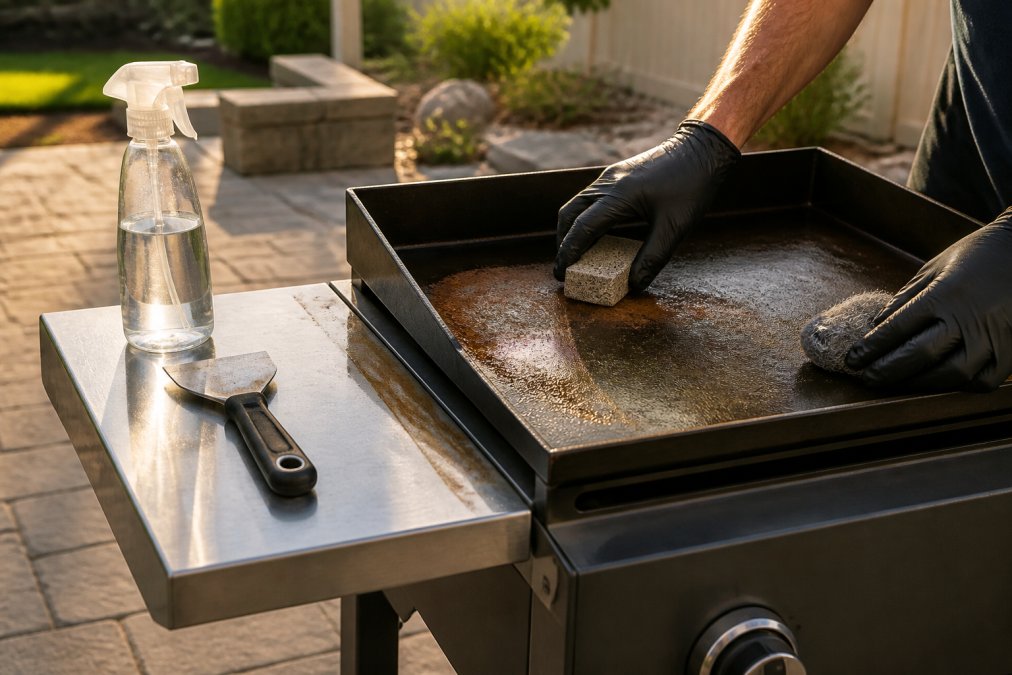
- A scraper or straight-edged spatula approved for your plate, to lift loose debris and flaking residue before anything else touches the surface.
- Paper towels, clean cloths, or microfiber towels for wiping and, just as important, for drying.
- A non-abrasive pad for stainless or plated surfaces, if the manual allows one.
- A grill stone, pumice block, or fine steel wool for rust on seasoned steel only, and only where the manual permits it. These are abrasives, so keep them away from plated surfaces unless the manual says otherwise.
- Warm water and a degreaser if the manual allows them. Wildfire's griddle manual, for example, says to wash its stainless steel with warm water and use a third-party degreaser on tough spots.
- Use the oil your manual recommends if your griddle needs seasoning or a protective oil coat after cleaning.
Skip sanders, grinders, wire wheels, and coarse sandpaper unless the manufacturer specifically calls for them. They remove metal along with the rust.
How to Remove Rust from an Outdoor Griddle: Step by Step
Work outdoors, wear gloves, and follow your manual wherever it differs from the steps below.
Step 1: Cool the Griddle and Shut Off the Fuel
Clean only when the griddle is cool, with the fuel supply turned off at the cylinder or source. Wildfire's griddle manual gives this rule for all cleaning and maintenance.
Step 2: Scrape Off Loose Debris
Use the approved scraper to lift loose debris and flaking residue, then wipe the surface clean. Removing loose material first means you aren't grinding it into the plate in the next step.
Step 3: Remove the Rust with the Mildest Approved Method
Start gentle and step up only if needed.
- Seasoned steel: work the rusted area with a grill stone or fine steel wool, if your manual allows them, using light pressure until bare metal shows.
- Stainless steel: wash the area with warm water and, for tough spots, an approved degreaser. Ask the manufacturer before using anything stronger on the cooking surface. Wildfire's manual warns that stainless steel polishes are for the exterior only, never the cooking surface.
- Chrome-plated: clean only with the method the manual describes. If rust keeps coming back, or the plating looks worn through, contact the manufacturer instead of scrubbing harder.
Step 4: Rinse and Dry Completely
Wipe away the loosened rust and any cleaner, then dry the plate thoroughly with a clean towel. Don't let it air dry. Wildfire's manual notes that standing water can discolor stainless steel, and cleaning solutions left on the surface can cause corrosion.
Rebuild the Protective Layer
What comes next depends on the surface.
Seasoned steel needs its seasoning rebuilt right away, because bare steel rusts quickly. The usual approach is to warm the plate, wipe on a very thin coat of oil, wipe off the excess, and heat it until the oil bonds to the steel, then repeat for a few coats. Use the oil, temperature, and number of coats your manual recommends.
Stainless steel and chrome-plated surfaces may need different care. Some manuals call for a light oil coat after cleaning, and others don't. Follow your manual rather than applying a seasoning routine written for steel flat-tops.
How to Keep Rust from Coming Back
Most griddle rust starts with moisture or something corrosive left sitting on the surface. A few habits prevent most of it.
- Cool, clean, and dry after every cook. For more on the post-cook routine, see our guide on how to clean an outdoor griddle after cooking.
- Keep it covered when not in use, but never while it is still hot. Wildfire recommends a fitted, breathable cover made for the unit and warns that covering a hot griddle could start a fire.
- Empty and clean the drip tray. Rainwater can collect in an uncovered griddle's drip tray and spill grease and water into the cart or cabinet.
- Keep corrosive things away. Wildfire's manual lists pool chemicals, chlorinated sprinkler water, salt air, mortar dust, and cleaning sprays left on the surface as common causes of corrosion on stainless steel. Don't store pool chemicals in an island cabinet.
- Don't cover food residue. Food left on the surface under a cover in humid weather can start corrosion.
Griddle Rust Prevention Checklist
| When | What to Do |
|---|---|
| After every cook | Let it cool, clean the plate as the manual directs, dry it with a towel, apply oil if your manual calls for it, and empty the drip tray. |
| Between cooks | Keep the griddle covered once it has cooled |
| Regularly | Check the edges, corners, and underside of the plate for early spotting |
| Before a long break | Clean and dry the griddle fully, protect the surface as the manual directs, and cover it. |
When Rust Keeps Coming Back
If rust returns soon after cleaning, one of these is usually the reason:
- The plate wasn't fully dried. Moisture left on the surface, or in the drip tray, starts the cycle again.
- The protective layer wasn't rebuilt. On seasoned steel, bare metal left without fresh seasoning rusts quickly.
- Something corrosive keeps reaching the surface. Salt air, pool or sprinkler water, cleaner left on the plate, or food residue trapped under a cover in humid weather.
Pitting, flaking, or soft spots that keep crumbling, or plating that looks worn through, are signs to stop and contact the manufacturer about your options.
Mistakes That Damage a Griddle Surface
- Using an abrasive on a stainless or plated cooking surface without checking the manual first
- Reaching for a grinder, wire wheel, or sander, which removes metal rather than just rust
- Leaving vinegar, rust remover, or another cleaner sitting on the plate
- Using exterior stainless steel polish on the cooking surface
- Letting the plate air dry, or covering it while it is damp or still hot
If you're comparing griddles, check the cooking surface material listed on each product page. You can browse our freestanding gas griddles and built-in gas griddles, and our guide to maintaining outdoor kitchen stainless steel covers the rest of the stainless in an outdoor kitchen.
Frequently Asked Questions
Does white vinegar remove rust from a griddle?
Vinegar is a mild acid that can loosen light surface rust, but not every manufacturer approves it for every cooking surface. Use it only if your manual allows it; don't leave it sitting on the plate. Then rinse, dry with a towel, and protect the surface as the manual directs.
Is it safe to cook on a griddle that has rust on it?
Don't cook on rust. Remove it first, then rebuild the protective layer or follow your manual's care steps before the next cook. If pitting or flaking remains after cleaning, contact the manufacturer.
Can a heavily rusted outdoor griddle be saved?
Often, if the metal underneath is still solid and the surface type allows the cleaning it needs. Deep pitting, flaking, soft spots, or worn-through plating are signs to stop and ask the manufacturer about your options.
Can a stainless steel griddle rust?
Yes. Stainless steel resists rust better than other steels, but it isn't fully stain- or weather-proof. Salt air, pool chemicals, sprinkler water, and cleaners left on the surface can cause spotting and corrosion. Keep it clean, dry it with a towel, and cover it once it has cooled.
Questions about griddle care or which griddle fits your backyard? Call 904-621-2505.