Charcoal vs Electric Smokers: How to Choose
Table of Contents
- Charcoal vs Electric Smokers: The Core Trade-Offs
- Flavor Profile: Smoke Ring, Bark, and Smoke Intensity
- Hands-On Time and the Learning Curve
- Charcoal Smoker Temperature Control and Airflow
- Smoker Fuel Efficiency and Long-Term Running Costs
- Weather, Power, and Where You Plan to Cook
- Maintenance, Cleaning, and Build Quality
- Which Smoker Fits Your Backyard
- Frequently Asked Questions
Last Updated: September 21, 2026
Charcoal vs Electric Smokers: The Core Trade-Offs
Choosing between charcoal and electric smokers comes down to one question: how much of the process do you want to control yourself? Charcoal smokers reward attention with deeper smoke character, while electric smokers trade some of that character for consistency. This guide from Backyard Kitchens Direct breaks down flavor, hands-on time, weather needs, and long-term fuel costs so homeowners can match a smoker to how they actually cook.
How Each Type Actually Cooks
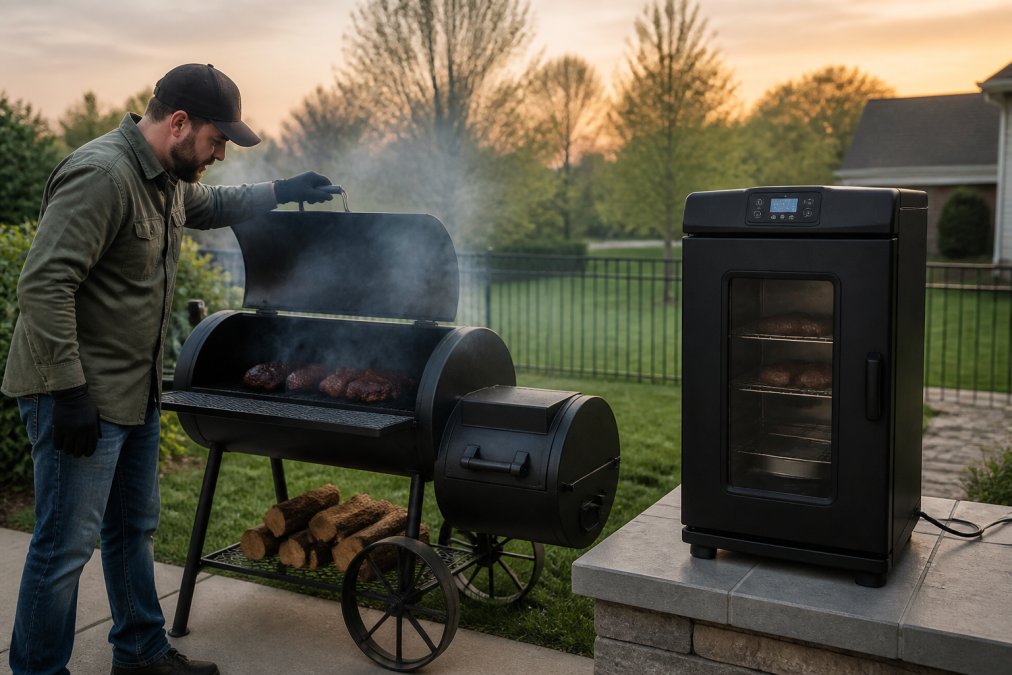
A charcoal smoker burns lump charcoal or briquettes in a fire chamber, and the cook manages heat by adjusting vents and airflow. An electric smoker uses a heating element to hold a set temperature while wood chips or chunks smolder for smoke. One asks for involvement; the other asks for an outlet. Neither is universally better, and the right pick depends on whether the cook enjoys tending a fire or wants to walk away. Exact temperature ranges, cook times, and capacity vary by model, so the manufacturer's manual is the source to check before buying.

Flavor Profile: Smoke Ring, Bark, and Smoke Intensity
Charcoal produces a more pronounced smoke flavor and a deeper smoke ring. Burning charcoal alongside wood chunks generates the compounds that build bark and color, and airflow control lets a cook push smoke intensity higher or pull it back. Electric smokers run cleaner and milder, which suits ribs, sausages, and poultry where subtle smoke is the goal.
The trade-off is real: many cooks find electric results consistent but less complex, while charcoal delivers more character with more variability. Cold smoking and hot smoking are both possible on either type, though the technique differs, and how often you add charcoal, wood chunks, or wood chips changes how much attention the fire or smoke needs. Personal taste, not spec sheets, decides this one.
Hands-On Time and the Learning Curve
Hands-on time is the clearest dividing line between the two, and it breaks down into three separate skills: starting the fire, holding temperature, and managing fuel and smoke across a long cook. Charcoal asks you to learn all three. Electric asks you to learn mostly the third.
What Charcoal Actually Demands
A charcoal cook is a series of small decisions. You light the coals, often with a chimney starter for an even bed, then dial in temperature by adjusting intake and exhaust vents. As the fire burns down, you add fuel, which means opening the cooker, losing heat, and waiting for recovery. Ash builds up and needs managing on longer sessions. Wind and cold push the fire around, so the same vent setting that worked last weekend may run hot or cool today. None of this is hard, but it is continuous, and it is the reason charcoal cooks describe the process as part of the appeal.
What Electric Actually Demands
An electric smoker replaces fire management with a controller. You set a target, load wood chips or chunks, and the element cycles to hold temperature. The remaining skill is smoke management: how much wood to add, how often, and when to stop. Oversmoking is the most common early mistake on electric units, because it is easy to keep adding chips when the smoke looks thin. Digital controllers and built-in thermometers remove temperature guesswork, but they do not remove the need to read the manual for your specific model's chip loading and refill guidance.
Which Curve Suits Which Cook
If you want to learn a craft and enjoy the ritual of tending a fire, charcoal's curve is the point, not a barrier. If you want consistent results with minimal attention, electric's shorter curve gets you cooking sooner. A common pattern is that beginners start on electric to learn smoke and doneness, then move to charcoal once temperature management feels worth the effort. Either path works. The mistake is buying charcoal for convenience or electric for maximum smoke control, because each type is built around the opposite priority.
Match the smoker to the time you actually have, not the time you wish you had. A charcoal cooker you never light because it feels like work is worse than an electric one you use every weekend.
Charcoal Smoker Temperature Control and Airflow
Charcoal smoker temperature control depends on airflow, not dials. The fire burns hotter when intake and exhaust vents open wider and cools when they close down, so the cook is really managing oxygen the whole way through. Thermal mass matters too: heavier cookers hold heat longer and recover faster after the lid opens.
Electric smokers replace that skill with a heating element and a digital or PID controller that holds a set point automatically.
Smoker Fuel Efficiency and Long-Term Running Costs
Running costs are where charcoal and electric smokers diverge most, and most buying guides skip the math. The two fuels are billed in completely different ways, so a fair comparison means tracking them separately over a full season rather than comparing a bag of charcoal to a month of electricity.
How Charcoal Costs Accumulate
Charcoal is a consumable you buy by the bag, and consumption scales with cook length, cooker size, ambient temperature, and wind. A long brisket cook on a larger offset unit can burn through far more fuel than a short rib session on a compact kettle, and cold or breezy days push consumption higher because the fire works against the surrounding air.
How Electric Costs Accumulate
An electric smoker's fuel is household electricity, so the cost shows up on the utility bill rather than at the register. The bill depends on the unit's wattage, how long it runs per cook, and your local utility rate, which varies widely by region and season. Because the element cycles on and off to hold temperature, actual draw is lower than a simple watts-times-hours estimate would suggest, but the honest answer is that no single figure applies to every household.
A Fair Way to Compare the Two
The cleanest approach is to track actual spend across several cooks of similar length and load. Note charcoal bags purchased and wood used on one side, and estimate electric draw from wattage and run time on the other. Most home cooks find the per-cook electric cost is lower and more predictable, while charcoal cost swings with weather and cook length.
| Cost Factor | Charcoal Smoker | Electric Smoker |
|---|---|---|
| How you pay | By the bag, at purchase | On the utility bill |
| Predictability | Varies with weather and cook length | More consistent per cook |
| Secondary fuel | Wood chunks or chips | Wood chips only |
| Cold-weather impact | Higher fuel burn | Longer element run time |
| Best way to compare | Track bags and wood per cook | Track wattage and run time against your rate |
Run three or four comparable cooks on each type before deciding. Real spend over a month tells you more than any per-hour estimate, because your climate, cook length, and utility rate all move the number.
Weather, Power, and Where You Plan to Cook
Where the smoker lives shapes the decision as much as flavor does. Charcoal units run anywhere with ventilation and a safe surface, though wind and cold make temperature harder to hold. Electric smokers need a protected outdoor outlet and should never be used in rain without proper cover, and any electrical setup should follow the manufacturer's guidance and local code, not guesswork.
Maintenance, Cleaning, and Build Quality
Maintenance routines differ, but both types need regular attention. Charcoal smokers collect ash that must be emptied, and grates need scraping and occasional seasoning to resist rust. Electric smokers avoid ash but require cleaning of the element area, water pan, and chip tray, and moisture left inside can shorten the unit's life.
Which Smoker Fits Your Backyard
The right answer depends on the cook, not the category. Choose charcoal if the ritual of tending a fire and chasing deeper smoke flavor appeals, and accept the learning curve as part of the hobby. Choose electric if consistency and low hands-on time matter more than maximum smoke intensity.
Before buying either type, measure the cooking spot and check where power or airflow will come from. Outlet distance and wind exposure shape daily use more than any spec on the box.
Frequently Asked Questions
Is an electric smoker as good as a charcoal smoker?
It depends on what you want from the cook. Electric models hold steady heat with little input, which suits long cooks on busy days. Charcoal delivers a stronger smoke profile and more control over airflow and fuel, but you tend the fire more. Neither is better across the board. Check each model's manual for its own temperature range and features rather than assuming a type guarantees a result.
What type of smoker is best for beginners?
Many beginners start with electric because the digital controller handles heat while they focus on rubs, wood chips, and timing. Charcoal rewards patience: you learn venting, charcoal chimney lighting, and ash management early, and those skills carry over to any future cooker. If you want low stress on your first brisket, electric is the easier entry. If you want to learn fire management, start with charcoal.
What are common problems with electric smokers?
Electric smokers depend on a working outdoor outlet and a steady power supply, so an extension cord run across a wet patio is a real limitation. They also produce a lighter smoke flavor, and wood chip trays need refilling on longer cooks. Weather exposure can affect the heating element and controller over time. Specific power and placement requirements vary by model, so follow the manufacturer's manual.
How does hands-on time compare between charcoal and electric models?
Charcoal asks for periodic attention: adding lump charcoal or briquettes, adjusting vents, and clearing ash. Electric runs closer to set it and forget it, since the controller maintains heat and you mainly manage wood chips and the meat. A long charcoal cook can mean several check-ins; an electric cook may need only occasional chip refills. Exact timing depends on the smoker, the fuel load, and the weather.
Matching a smoker to your cooking style takes a little honest self-assessment: do you want to tend a fire, or set it and forget it? Backyard Kitchens Direct helps homeowners compare equipment with clear, product-focused guidance, from charcoal offsets to digital electric cabinets. Browse the smoker collection, with shipping to the lower 48 states.