


Gas Grill Size Guide: Choosing the Right Freestanding Grill
Table of Contents
- Start With Cooking Surface Area
- How Many People Will You Cook For?
- Freestanding Gas Grill Dimensions and Footprint
- Review Burners and Cooking Features
- Consider Warming Racks and Storage
- Choose the Correct Fuel Configuration
- Use This Decision Checklist
- Frequently Asked Questions
Last Updated: August 31, 2026
Choosing the right gas grill size is one of the most overlooked decisions homeowners make when building an outdoor cooking space. Many people buy based on aesthetics or price, then realize months later that their grill either can't handle what they actually cook or dominates a patio that once felt spacious. The right gas grill size depends on what you cook, how many people you typically feed, your patio's footprint, and how much prep space you need alongside the grill.
At Backyard Kitchens Direct, we help homeowners think through these practical factors before choosing a freestanding grill. This guide walks you through cooking surface area, burner count, patio dimensions, and the features that matter most for your cooking style.
Start With Cooking Surface Area
Cooking surface area is the single most important specification when sizing a freestanding gas grill. It determines how much food you can cook at once and how much flexibility you have with temperature zones.

Cooking surface area is measured in square inches and typically refers to the primary cooking grate, the main area where you place food directly over the heat. A grill's total cooking area may also include a warming rack or secondary cooking surface, but the primary area matters most for daily cooking.
Small freestanding grills start around 300-400 square inches of primary cooking area. Medium grills typically range from 450 to 650 square inches. Large grills exceed 700 square inches. The difference between these categories isn't just about cooking more food simultaneously; it's about how much heat flexibility you have and whether you can create temperature zones for different cooking styles.
For example, a grill with 500+ square inches lets you sear steaks on one side while keeping vegetables at a gentler temperature on the other. A grill with 300 square inches forces you to cook everything at roughly the same heat level or work in batches. That matters if you entertain regularly or cook different proteins and vegetables together.
Check the manufacturer's product page for the exact cooking surface area on the model you're considering. Don't estimate based on the grill's overall size; a compact grill might have more usable cooking area than a larger one with thick frames or internal design inefficiencies.
How Many People Will You Cook For?
The number of people you regularly cook for is the practical starting point for sizing. This isn't about maximum capacity; it's about realistic, comfortable cooking.
Most sources suggest 100 square inches of cooking surface per person. That's a reasonable baseline, but it assumes you're cooking simple items like burgers or chicken breasts. If you entertain regularly, cook whole fish, roast vegetables alongside protein, or use different heat zones, you'll want more surface area than the minimum.
Think about your typical entertaining scenario. Are you cooking for four people on a weeknight, or hosting eight to ten guests on weekends? Do you cook just proteins, or do you prepare sides on the grill too? Do you smoke, sear, and roast all in one meal?
Weeknight cooking for a family of four works well with 400-500 square inches. You can cook proteins and vegetables comfortably and finish everything at roughly the same time. Regular entertaining for six to eight people benefits from 550-700 square inches, which gives you room to manage different cooking temperatures without crowding. Frequent hosting of larger groups or serious backyard cooks who use the grill for smoking, searing, and roasting in a single session should consider a grill with 700+ square inches of cooking area. Your typical guest count matters more than your maximum capacity—size the grill for what you cook most often, not the occasional large gathering.
Freestanding Gas Grill Dimensions and Footprint
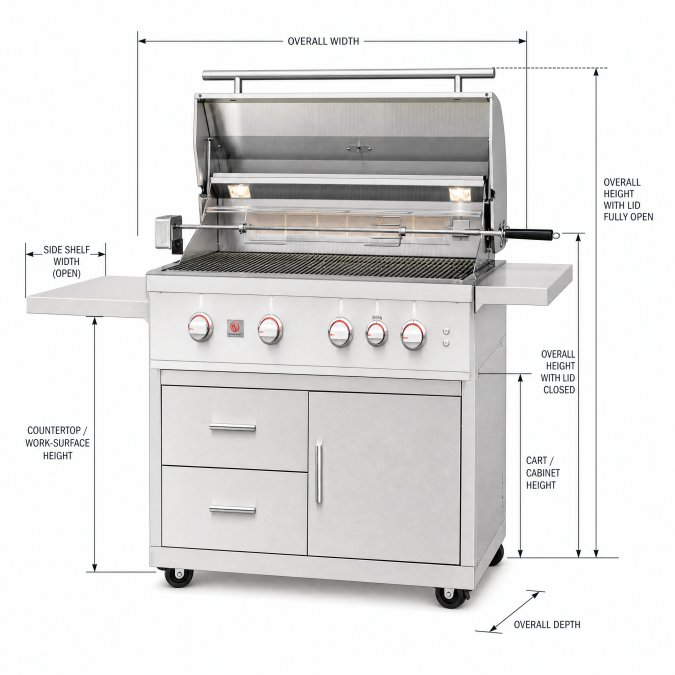
A freestanding gas grill's footprint- its width, depth, and height- determines whether it fits your patio and how much space you have left for prep tables, seating, or movement.
Freestanding grills typically range from 30 to 42 inches wide. Depth usually ranges from 24 to 30 inches, and height (from the ground to the cooking grate) typically ranges from 36 to 42 inches. These dimensions matter because they affect not just whether the grill fits, but how usable your patio becomes afterward.
A 30-inch grill works on smaller patios but limits your cooking surface. A 36-inch grill balances cooking capacity with a reasonable footprint. A 42-inch grill offers a generous cooking area but takes up significant space. The Summerset Quest 30-Inch Freestanding Gas Grill, for example, measures 30 inches wide and has a primary cooking area of 512 square inches, making it suitable for smaller patios or tight entertaining spaces. The Summerset Quest 42-Inch Freestanding Gas Grill expands to 42 inches wide, offering 785 square inches of primary cooking area and is designed for homeowners with larger patios and more ambitious entertaining plans.

Check the product page or manufacturer documentation for exact dimensions before purchasing. Measure your patio space carefully, accounting for walkways, seating areas, and any nearby structures.
Plan Your Patio Space
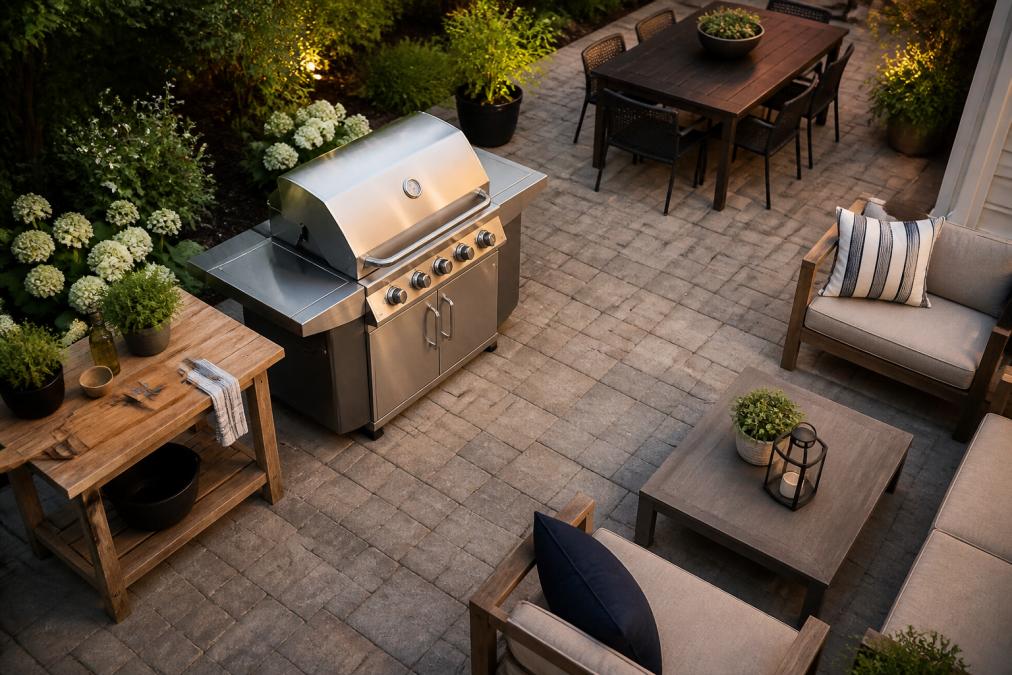
Measure the proposed location, then mark the grill's listed footprint on the patio with tape or chalk. This gives you a practical view of how the layout will work before you buy. Account for:
- usable walking and cooking space;
- side shelves, doors, lids, and other moving parts;
- the prep surface or cart you expect to use; and
- seating and traffic routes you want to keep accessible.
For a tighter patio, a smaller footprint with a well-matched cooking area is often more useful than the largest grill that can physically fit.
As you map the space, consider the flow between the grill, your prep area, and where you'll serve food. A simple layout can be more useful than adding equipment that doesn't fit how you cook.
Follow the Product's Placement Instructions
Do not use a generic clearance distance when planning an outdoor gas grill. Placement, combustible-clearance, ventilation, and operating requirements vary by model and installation. Follow the exact owner's manual and manufacturer placement instructions for the grill you are considering. If a local requirement applies, verify it with the appropriate local authority or qualified professional.
Review Burners and Cooking Features
Burner count is useful only in context. It can affect how the manufacturer designs heat control across the grill, but it does not create a universal number of independent cooking zones. Review the exact burner layout, control configuration, cooking grates, heat-zone features, and any included accessories on the product page.
BTU measures stated heat input, not a standalone performance score. Compare it alongside the cooking area, burner design, heat-control features, and the manufacturer's specifications. Avoid choosing a grill solely because it lists a higher BTU number.
Some models include features such as a rear infrared burner, rotisserie equipment, a side burner, a smoker box, or a griddle plate. These can be valuable when they match your cooking habits, but they vary by model. Confirm what is included with the exact configuration you are buying.
Consider Warming Racks and Storage
A warming rack is a secondary surface that may help hold finished food while the main grates remain in use. It can add flexibility, but it should not be treated as a substitute for the primary cooking area you need.
Also review cart storage, shelves, and the space intended for fuel, tools, or accessories. Storage layouts vary widely. Check the exact product specifications and owner's manual rather than assuming every freestanding grill stores items the same way.
Choose the Correct Fuel Configuration
Freestanding gas grills may be offered in liquid propane or natural gas configurations. Confirm the fuel type for the exact SKU before purchasing. Do not assume you can convert it to the other; conversion is appropriate only when the manufacturer explicitly documents and approves it.
Choose your fuel before purchase because it affects the model, required connection, and where you can use it. Follow the product manual and applicable local requirements for setup, connection, and operation. For help comparing a freestanding model with a built-in project, see Freestanding Gas Grill vs. Built-In Grill.
Propane tank storage and refilling logistics matter. If you don't have convenient access to propane refills or storage space for backup tanks, a grill's fuel efficiency becomes more important. Confirm tank size and refill availability in your area before purchasing.
Use This Decision Checklist
| Ask yourself | What to compare |
|---|---|
| What do I cook during a typical meal? | Primary cooking area and heat-control features |
| Do I often prepare several foods at once? | Cooking surface, burner layout, and secondary surfaces |
| How much room do I want to devote to the grill? | Exact overall width, depth, height, shelves, and cart |
| Will I need a separate prep surface? | Available side shelves, storage, and patio layout |
| Which fuel configuration fits the model and my plan? | The exact LP or natural-gas SKU and manufacturer instructions |
Before ordering, verify the model's product specifications, included components, fuel configuration, dimensions, and owner's manual. That final check is more reliable than any generic grill-size rule.
Explore Backyard Kitchens Direct's current gas grill selection to compare freestanding options by the features and footprint that matter to your outdoor cooking plan.
Frequently Asked Questions
What cooking surface area do I need for a family of four?
There is no reliable one-number rule. Compare the manufacturer's stated primary cooking area with the meals you cook most often. A family that grills only a few items at a time may have different needs from one that regularly prepares proteins, vegetables, and sides together or hosts guests.
How do I measure my patio space for a freestanding grill?
Use the exact product specifications for the complete grill and cart, then mark that footprint on the patio. Account for shelves, doors, lid movement, prep surfaces, seating, and traffic paths. Follow the exact model's owner's manual for placement and clearance requirements.
What's the difference between primary cooking area and warming racks?
The primary cooking area is the main grate space over the grill's primary heat source. A warming rack is a secondary surface that may help hold food or provide an additional cooking position, depending on the model. Review how each manufacturer defines its total cooking area before comparing products.
Should I choose propane or natural gas for my freestanding grill?
Choose the fuel configuration offered for your exact model and suited to your outdoor cooking plan. Confirm the SKU's fuel type before ordering, and follow the manufacturer's instructions for connection, operation, and any approved conversion options.


