


How to Choose a Freestanding Gas Grill for Your Backyard
Table of Contents
- Start With the Right Grill Type
- Freestanding vs. Built-In Gas Grills
- Measure Before You Buy
- Compare Cooking Capacity and Features
- Look Closely at Materials and Construction
- Cart Features and Everyday Use
- Confirm Fuel and Assembly Requirements
- Freestanding Gas Grill Buying Checklist
- Frequently Asked Questions
Last updated: August 28, 2026
Choosing a freestanding gas grill is a considered purchase for the backyard. The right model should suit the space you have, the way you cook, and the features you will actually use. This guide explains how to compare cooking capacity, burner layout, construction, cart features, fuel configuration, and the dimensions that matter before ordering.
Start With the Right Grill Type
A freestanding gas grill combines a grill head with a cart. It differs from a built-in grill head, which is designed for a permanent outdoor kitchen structure, and from a freestanding griddle, which uses a flat cooking surface instead of grates. A modular outdoor kitchen island is a cabinet system that may house a built-in grill, but it is not itself a freestanding grill.
Cart construction, shelves, storage, wheels, fuel configuration, and included accessories vary by model. A freestanding grill can avoid the need for custom island construction, but it still requires proper assembly, placement, and use in accordance with the product manual.

Freestanding vs. Built-In Gas Grills
When a freestanding grill makes sense
A freestanding grill is often the practical choice when you want a self-contained cooking station without designing an island around it. Compare the assembled footprint, work surface, storage, and fuel configuration against your patio and cooking routine. If you are also comparing configurations, read our freestanding vs. built-in grill guide.
When a built-in grill or modular island is a better fit
A built-in grill can suit a permanent outdoor-kitchen plan, especially when you want coordinated counter space and compatible components. Its requirements are product- and project-specific. Confirm the exact manufacturer clearances, fuel, electrical, ventilation, and installation instructions before choosing a built-in grill or modular island. Backyard Kitchens Direct is a retailer, not an installer or contractor.
Measure Before You Buy
Start with the exact assembled width, depth, and height shown on the product page or in the manufacturer’s documentation. Then account for the lid opening, side shelves, doors or drawers, access for grease-tray removal, and the route from delivery to the final location. Manufacturer guidance—not a generic spacing rule—should determine placement clearances.
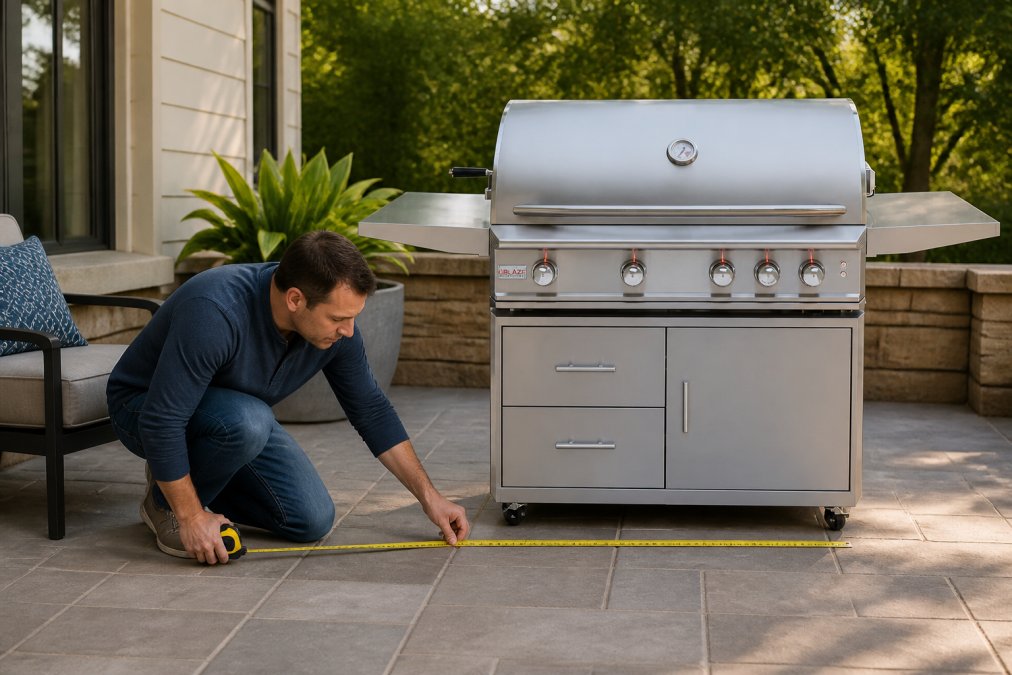
For a small patio, the best grill is not simply the narrowest one. Consider where you will stand while cooking, where food will be set down, and how people move through the space. A taped outline can make the working footprint much easier to judge before you commit.
Compare Cooking Capacity and Features
Cooking surface and independent burners
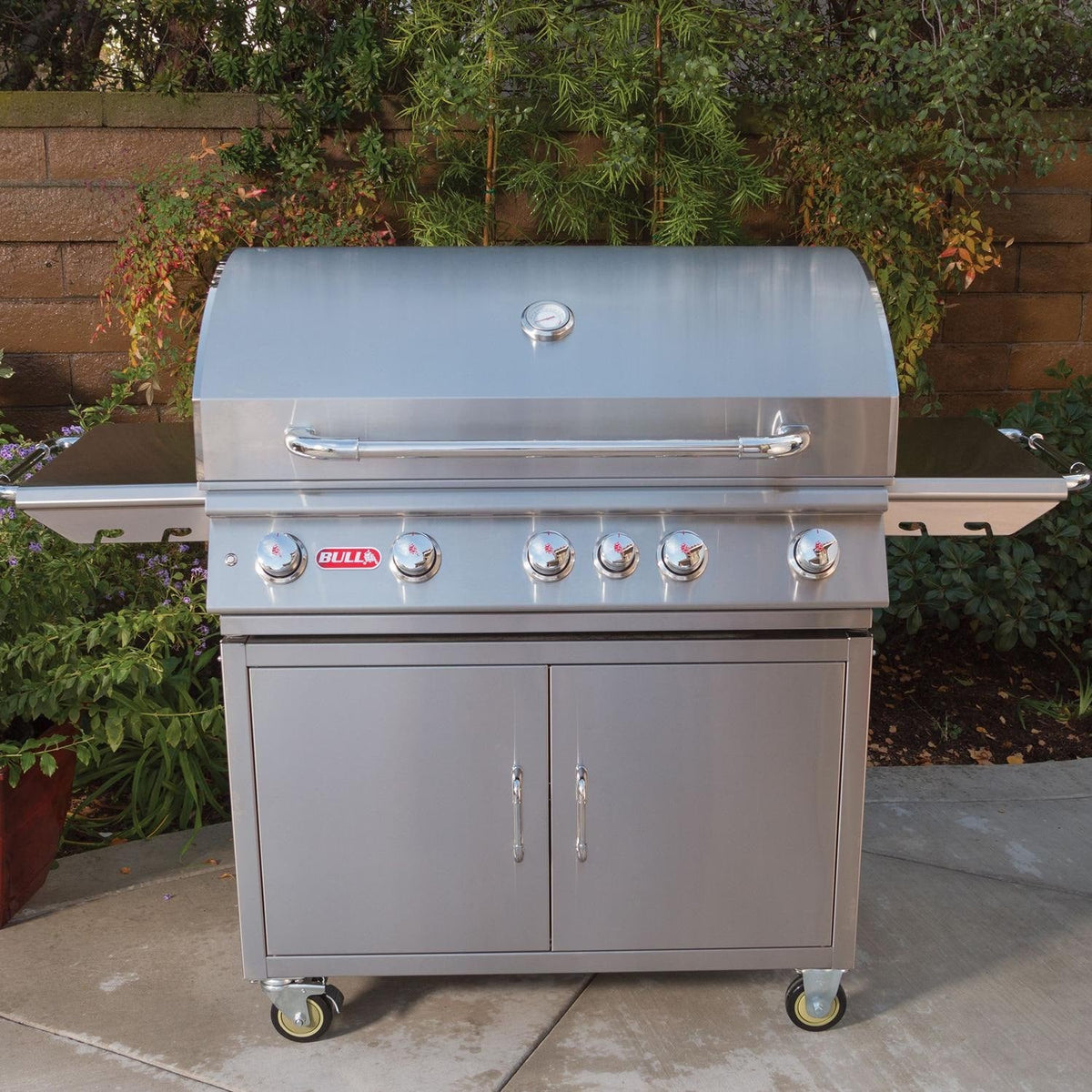
Compare the primary cooking surface, any warming area, and the number of independently controlled burners. Separate controls can help you manage different heat zones, but the burner count is only one part of the decision. Consider the foods you cook, whether you use indirect heat, and how often you host.
BTU ratings should be read alongside the cooking surface, burner layout, construction, and manufacturer information. A higher total BTU figure alone does not establish better performance or a better fit for your needs.
Rotisserie, sear, and side-burner options
Rear infrared burners, side burners, sear zones, rotisserie components, and similar features are not universal. Treat each as model-specific: check whether it is included, optional, compatible, or unavailable. If rotisserie cooking or stovetop-style outdoor cooking is important to you, confirm those details before ordering rather than assuming they come with the grill.
Look Closely at Materials and Construction
Review the materials listed for the grill head, burners, cooking grates, heat-management components, cart, and hardware. Stainless steel grades, grate materials, finishes, and component coverage can differ within the same product. A product page and the manufacturer's manual are the best places to confirm which exact model it uses and how it should be maintained.
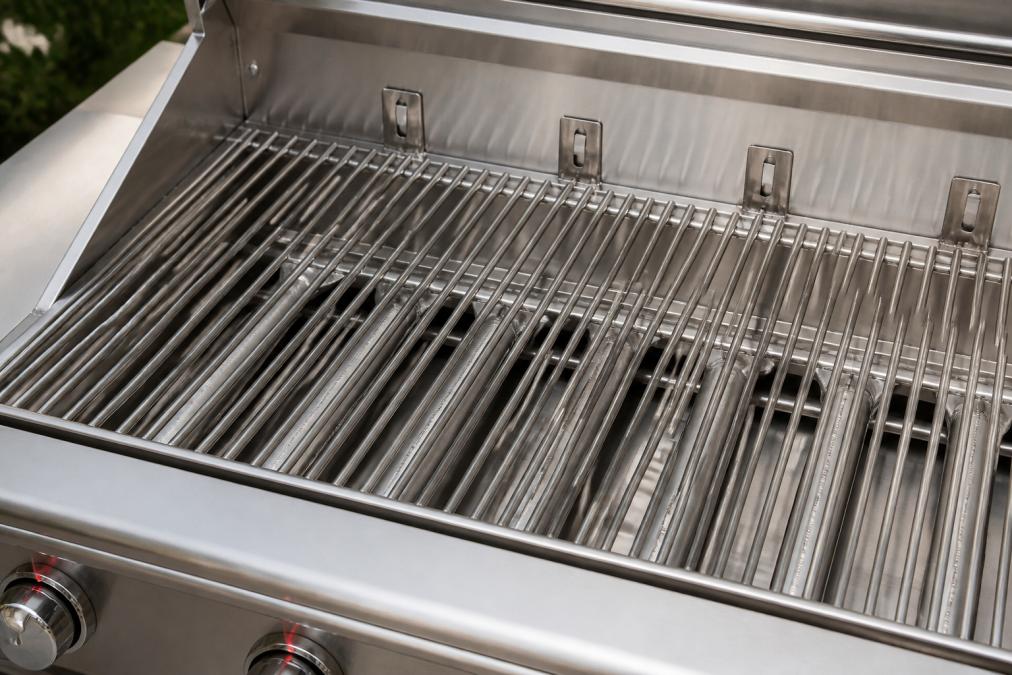
Use local conditions to guide your comparison. In areas with high humidity, salt exposure, heavy sun, or seasonal storage, follow the manufacturer’s care guidance and consider an appropriately fitted cover if the manufacturer offers one. Do not assume that a material or finish provides the same durability across all brands or components.

Cart Features and Everyday Use
The cart determines much of the everyday experience. Compare the actual prep space, cabinet layout, tool storage, caster design, tank storage where applicable, and access to the grease-management system. Check product photos, dimensions, and the manual rather than assuming that shelves fold, casters lock, or a propane tank fits inside every cart.
Also consider cleaning. Look for the manufacturer’s instructions on grease trays, grates, burner access, and replacement parts. A grill that is easy for you to inspect and clean is more likely to be used regularly.
Confirm Fuel and Assembly Requirements
Confirm the exact fuel configuration of the grill you are buying: liquid propane, natural gas, or a manufacturer-approved conversion option. Do not assume that a conversion kit is available or compatible. For any gas-line work or conversion, follow the manufacturer’s instructions and applicable local requirements; use a qualified gas professional when the work calls for one.
Before ordering, review the manual for assembly steps, required tools, included components, delivery considerations, and ongoing care. Those details vary by grill and are more useful than a generic assembly-time estimate.
Freestanding Gas Grill Buying Checklist
Factor |
What to confirm |
|---|---|
Footprint |
Exact assembled dimensions, lid and shelf movement, delivery path, and manufacturer placement guidance. |
Cooking capacity |
Primary cooking area, warming area, burner layout, and the foods or group sizes you typically cook for. |
Features |
Whether rotisserie, rear infrared, side burner, cover, and other accessories are included, optional, or unavailable. |
Materials |
Materials and finishes for the grill head, burners, grates, cart, and other components. |
Fuel |
LP or natural-gas configuration and any manufacturer-approved conversion options. |
Care |
Grease-management access, cleaning instructions, replacement parts, and cover availability. |
Warranty |
Current manufacturer warranty terms for the exact model and components. |
Once you have those answers, compare the models in our freestanding gas grill selection. Product pages should be your source for the exact specifications and manufacturer documentation for each model.
Frequently Asked Questions
What is the difference between a freestanding grill and a built-in grill?
A freestanding gas grill is supported by its own cart. A built-in grill is a grill head designed for a permanent structure, such as an outdoor-kitchen island. Their installation, fuel, clearance, and accessory requirements can differ, so confirm the product category before purchasing.
How many BTUs should a gas grill have?
There is no universal BTU number or BTU-per-square-inch formula that identifies the right grill. Compare BTU ratings with the cooking surface, burner layout, construction, and manufacturer information for the exact model.
What size freestanding gas grill do I need?
Choose based on the food you cook, the number of people you regularly serve, your need for separate heat zones, and the patio footprint you can support. Compare the exact primary cooking area, warming area, burner layout, and assembled dimensions rather than relying on a household-size rule.
How do I verify warranty information for a freestanding gas grill?
Review the current manufacturer warranty for the exact model before purchasing. Coverage can differ by component and may have eligibility or maintenance requirements. Review the manufacturer’s official documentation for binding terms.


